
With the odds on Andy Burnham becoming the next Prime Minister shortening, there is increasing interest in what that might mean for the housing market.
While he has not set out a formal housing policy, the Manchester Mayor’s public statements suggest he’ll take a more interventionist approach than the current Labour leadership, with a stronger role for councils, greater regulation in the private rented sector and large-scale public investment in affordable homes.
Affordability
It’s affordability, though, that appears to be at the heart of his thinking.
Speaking at a Resolution Foundation event in Westminster earlier this year, Burnham said: “Our aim as a country should be very explicit: lower rents, lower water bills, lower energy bills.”
Burnham has also backed higher council tax on expensive homes in London and the South East, arguing the current system unfairly benefits owners of high-value property because council tax valuations are still based on 1991 prices.
Major housebuilding programme
Council housebuilding is another major theme. In a Telegraph interview last year, he backed a £40 billion borrowing programme to fund council housing, describing it as the biggest state housing intervention since the 1970s. He also supported suspending Right to Buy on newly built council homes to stop affordable housing stock being lost.
When asked how it would be paid for, Burnham argued Britain needed to stop being “in hock to the bond markets”, comments that prompted concerns over how far a future Burnham government might be willing to increase borrowing.
However, he later attempted to modify his position, saying he had “never said Britain should ignore the bond market” but believed decades of political decisions had left Britain with too little room for large-scale investment.
Extensive regional regeneration
Burnham, though, has also been Mayor during a period of major investment in the region, and has repeatedly linked housing policy to wider regeneration and infrastructure planning, backing brownfield development and building around existing transport links.
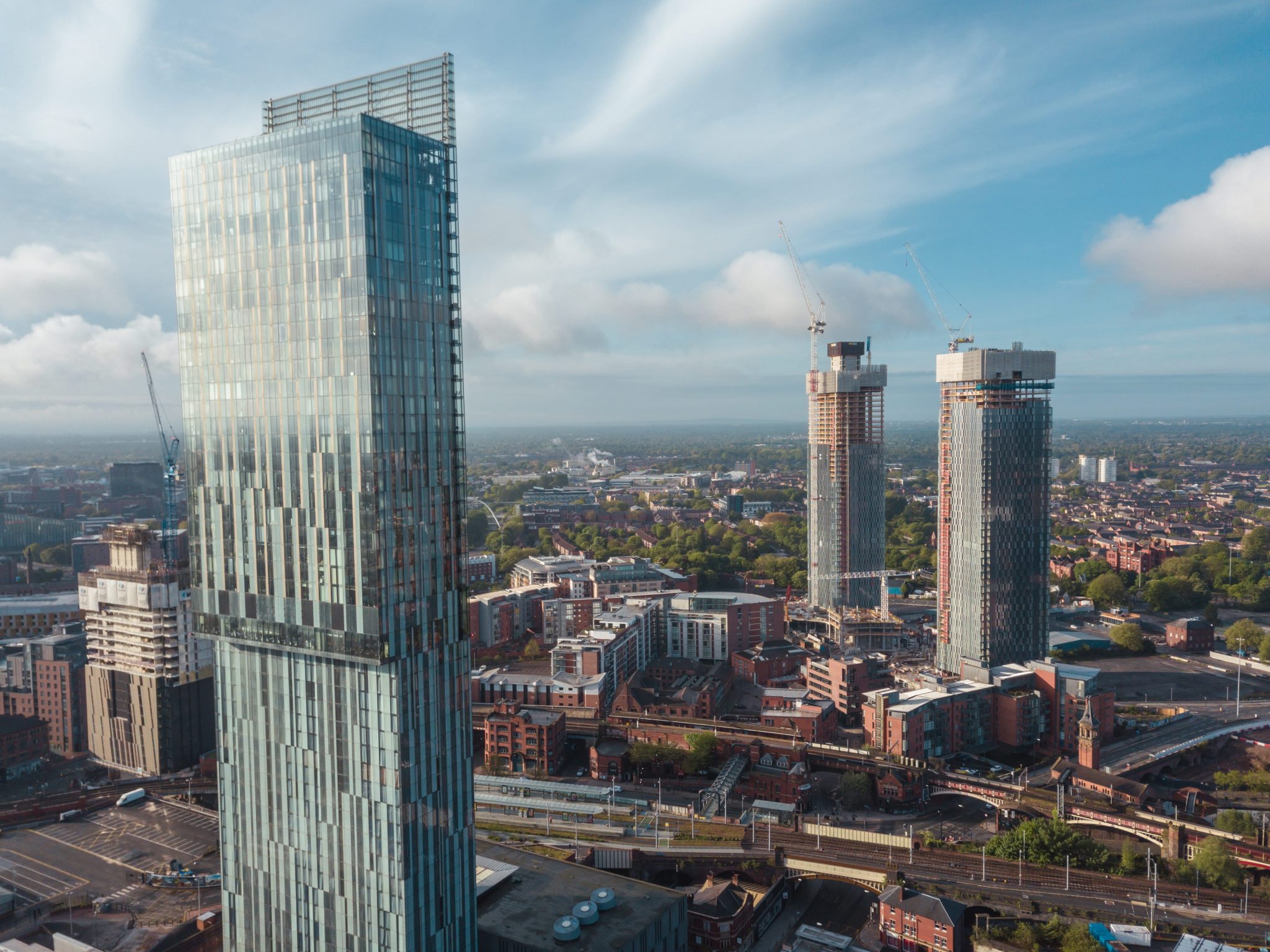
Manchester’s Piccadilly, Mayfield, Ancoats and New Islington have all seen billions of pounds of investment over the past decade, with large-scale build-to-rent schemes, transport-led redevelopment and city centre expansion under his mayoralty.
The £1.5bn Mayfield regeneration scheme alone is expected to deliver thousands of homes, offices and public spaces around Piccadilly Station.
Private Rented Sector (PRS)
When it comes to the private rented sector, Burnham’s approach is more nuanced than landlords might initially assume.
While he has supported tougher enforcement against rogue landlords and stronger action on non-decent housing, he has also argued that responsible landlords should receive more support to improve standards rather than simply facing additional penalties.
Greater Manchester reported a 43% rise in landlord fines to £1.47m earlier this year, with the money reinvested into tackling unsafe housing conditions.
In addition, he has proposed giving councils powers to compulsorily purchase non-decent rental homes.
But at the same time, Burnham announced grants of up to £30,000 for landlords carrying out EPC improvements through Greater Manchester’s Good Landlord Charter, saying authorities were “proactively supporting landlords to make improvements”.
He has also argued that the private rented sector should become more professionalised, with higher standards and better-managed housing stock becoming the norm.
Nothing set in stone
Whether Burnham will ever have the opportunity to implement any of these ideas, or if they would survive the harsh realities of Westminster or the current challenging economic conditions, remains unclear.