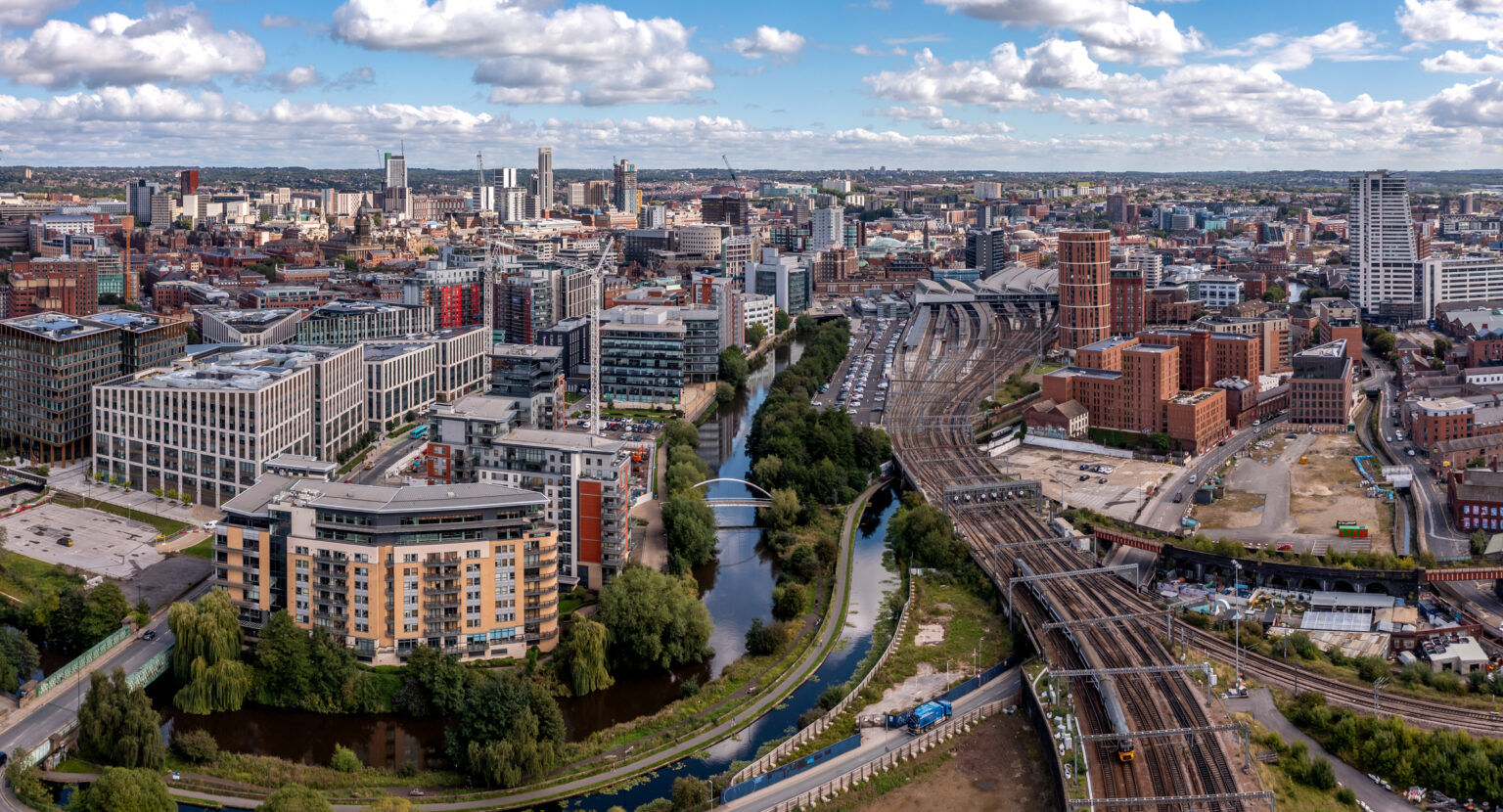

The West Yorkshire city of Leeds has seen vast improvements over recent years, and more projects in the pipeline are opening up investment opportunities.
With its leading universities, thriving business sectors and rapidly improving quality of living thanks to public and private investment, Leeds continues to rapidly evolve as a sought-after UK city for property investors.
Its affordability is another key component, with average property prices of around £245,000 according to the latest figures from the Office for National Statistics, making it an ideal location for first-time investors as well as those looking to diversify their portfolios. It also offers strong average buy-to-let rental yields of between 6-7%, underpinned by strong demand from graduates and young professionals.
The city is also being transformed by multiple regeneration schemes, which are set to boost the area’s amenities and grow the city’s economy, boosting jobs and attracting more people to Leeds. This involves six key city centre neighbourhoods: Mabgate, Eastside & Hunslet Riverside, South Bank, Holbeck, West End Riverside and the Innovation Arc.
A recent Savills report has also highlighted the innovation-led growth that is taking place in Leeds, setting it on track to become “a leading destination for innovation, investment and ideas, building a future economy that is sustainable, inclusive, and globally competitive”.
According to Savills, there are two flagship developments in Leeds that are continuing to reshape the city’s commercial landscape: Wellington Place and Aire Park.
New jobs, offices and homes
Wellington Place is a 21-acre neighbourhood situated right in the centre of Leeds. It incorporates six developments featuring around 1.5 million square feet of mixed-use space, including Grade-A offices, residential, retail and leisure options. It also features a central square, focused around the listed Victorian Railway Lifting Tower, and wide pedestrianised boulevards and avenues.
Now home to more than 50 companies, Wellington Place has attracted some big names to the city, including HMRC, NHS Digital, Sky Betting & Gaming, Lloyds, Arup, Mazars, GHD and Equifax, among many others. As Savills notes, the scheme has so far generated more than £200m in GVA while creating thousands of jobs and setting “new benchmarks for sustainability and wellbeing”.
Aire Park, which is part of the huge South Bank regeneration scheme, has also doubled the size of the city centre with the addition of 800,000 sq ft of office space along with 1,400 new homes and the largest city-centre park in the UK. The 24-acre regeneration scheme involved transforming the former Tetley Brewery site into a new district, and again had a focus on lifestyle and wellbeing with the introduction of vast amounts of green space.
Developments such as these are not only creating thousands of employment opportunities, but are also boosting housing demand in the city as it becomes a more appealing place to live for a wider range of people. This broadens the tenant pool for investors, while ensuring strong rental returns thanks to the rising number of potential tenants.
Future focus: Leeds Innovation Arc
One major long-term scheme still underway in the city is the Leeds Innovation Arc (LIA). Formed of a series of “innovation neighbourhoods”, the arc will be a connected 150-hectare zone that links the city’s educational institutions, hospitals and research facilities along with private partners, creating a link between some of the most important assets of the area.
According to Savills, the project will lead to the creation of around 20,000 new homes in and around the LIA, along with around 4,000 new jobs. The project also encompasses the creation of two new city centre parks, with the significant boost to green space and biodiversity being a key hook for the neighbourhood, as it seeks to create a vibrant community where people want to live and work.
It could create an economic boost of around £13 billion for the city, and is viewed as an accelerator for Leeds in bringing more people and businesses to the area. The scheme will also be transport-led, ensuring strong connectivity between each of the key areas within the zone. A £2.5 billion mass transit system and digital infrastructure will link the LIA with the city centre and outlying hubs, while sites will be unlocked to create jobs and housing while “balancing sustainability goals”.
Savills notes: “These initiatives ensure the Arc is not just a physical development but a dynamic ecosystem where academia, industry, and entrepreneurs converge to drive inclusive growth.”
The report also highlights the fact that, at present, Leeds has the lowest level of prime office supply out of the UK’s Big Six regional cities, meaning it is ripe for developers and investors to respond with “new, sustainable schemes” that meet the needs of the growing number of potential occupiers.