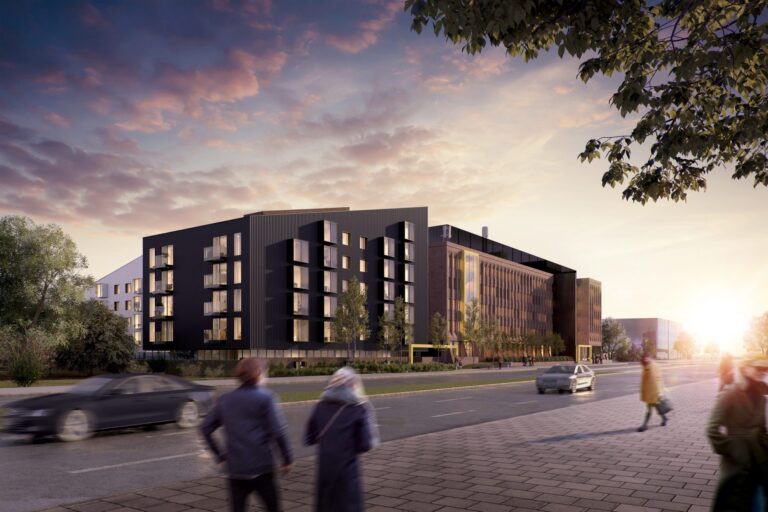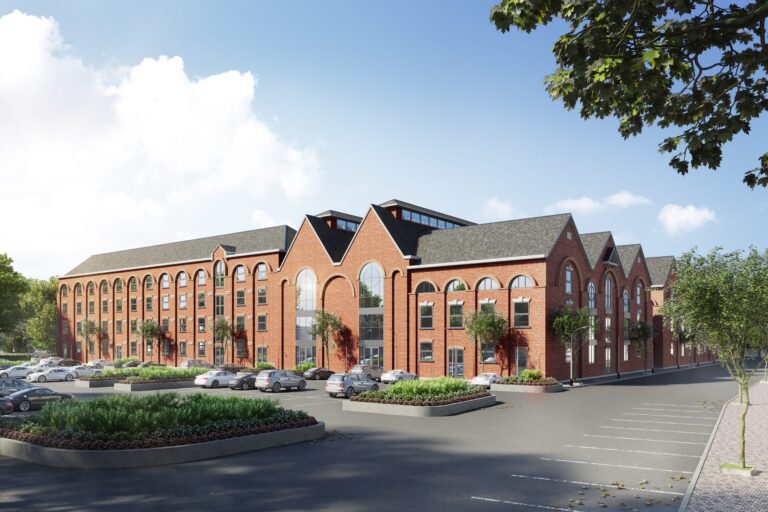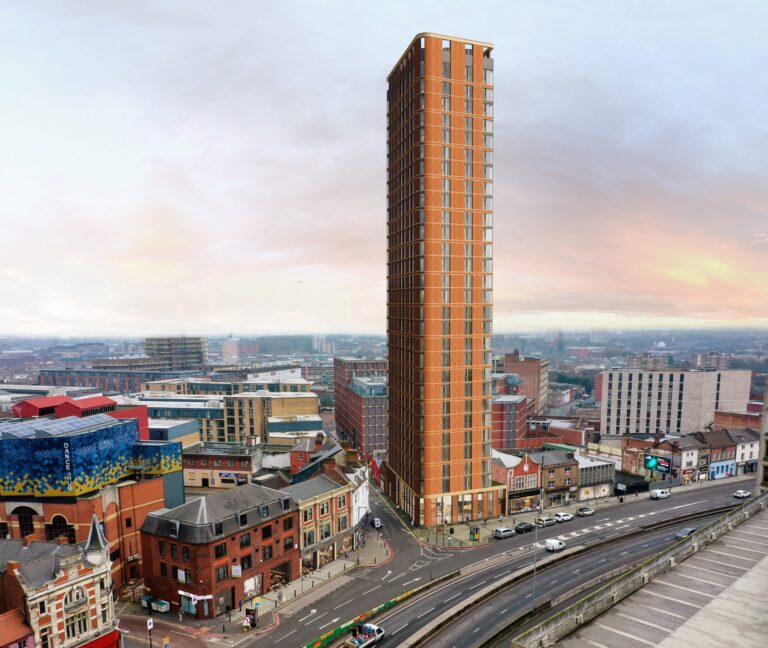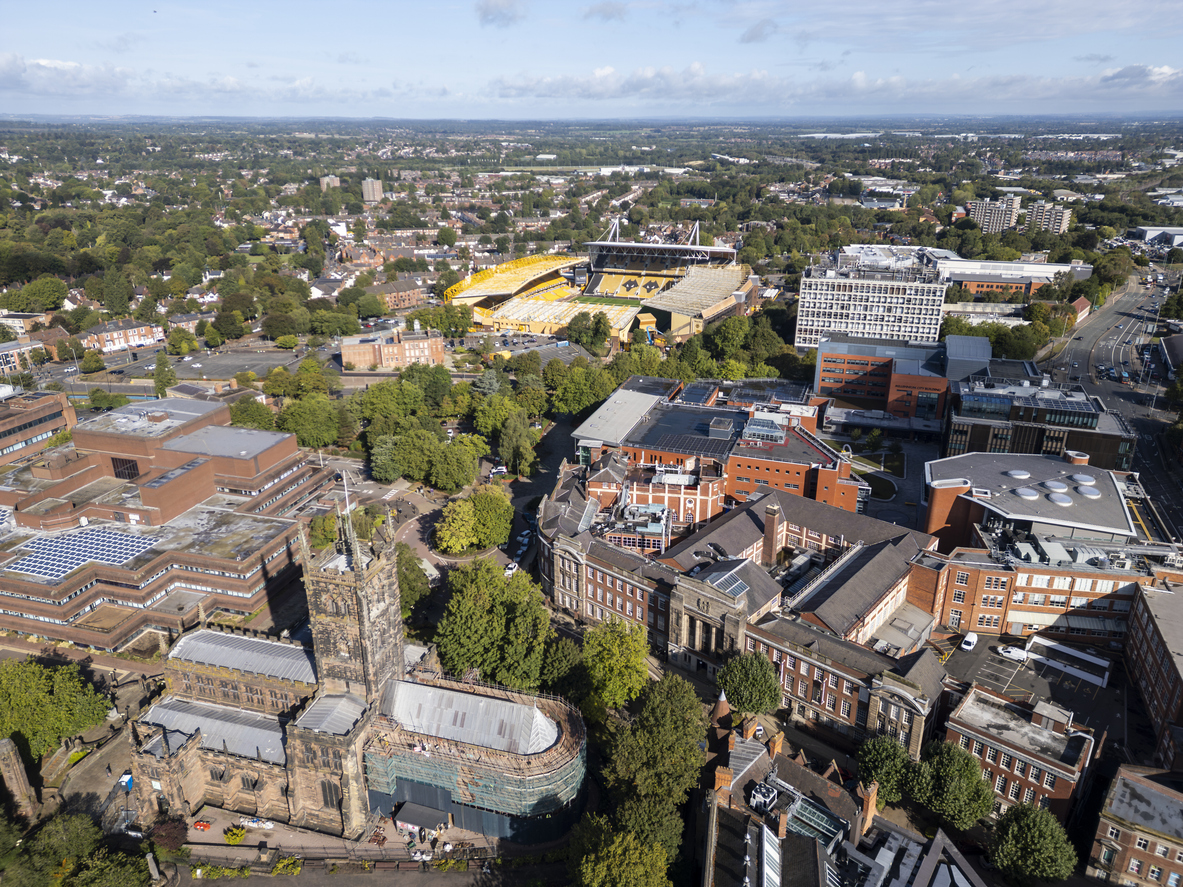

Wolverhampton is undergoing a major transformation, with the council reporting that £1bn is being invested in the city centre and thousands of new homes in the pipeline.
Much of the regeneration is still in its early stages, at a time when local property prices remain relatively affordable and both house prices and rents are rising considerably faster than regional and national averages.
So could Wolverhampton be emerging as the West Midlands’ next regeneration hotspot?
Major regeneration plans
At the heart of the plans is the recently approved Our Future City Centre Plan, which has identified 33 potential development sites in ten regeneration areas, with capacity for up to 6,750 homes.
Several major schemes are already in the delivery phase. These include the £150m Canalside South development on former industrial land, which will provide more than 500 homes, including hundreds of two and three-bedroom townhouses as well as apartments.
Work has also started on the first phase of the 12-acre Smithgate development, which will initially provide 331 homes and could eventually accommodate up to 1,000.
The £61m City Learning Quarter has meanwhile created a new city-centre campus for around 2,000 students, bringing together further education, adult learning and library facilities.
Turning grey into green
Perhaps the most eye-catching part of Wolverhampton’s regeneration is an attempt to tackle the city’s longstanding reputation for its grey and concrete city centre, with Lonely Planet once including Wolverhampton on a list of the world’s worst cities.
In a bid to improve its image, City of Wolverhampton Council is working with developer Capital & Centric on a proposed £100m redevelopment of the five-acre city-centre St George’s site.
The scheme is taking an innovative approach to regeneration that puts the landscape before the buildings.
That involves “de-paving” large areas of the site and removing concrete and tarmac to create green spaces, gardens, tree-lined streets and pedestrian routes. The homes, workplaces and other buildings are then designed around this landscape.
The approach is intended to create a greener and more attractive neighbourhood where people want to live, work and spend time, with up to 370 new homes alongside businesses and public spaces.
The idea was pioneered in Portland, Oregon, and has since been adopted in cities in both Europe and North America.
Wolverhampton overview
Wolverhampton is around 15 miles northwest of Birmingham, with the direct trains taking around 20 minutes, and London Euston is under two hours away.
It is home to around 264,000 people. At the last census, its population had grown by 5.7% over the previous decade, slightly below growth in the West Midlands and England.
The population is relatively young, with a median age of 38 compared with 40 in both the West Midlands and England, while more than 17,000 residents aged 16 and over were full-time students.
The city has a substantial employment base. The i54 business park on Wolverhampton’s northern edge has attracted more than £1bn of investment and supports more than 2,700 jobs, with major occupiers including Jaguar Land Rover, aerospace manufacturer Moog and industrial equipment specialist Atlas Copco.
US manufacturer Fortune Brands Innovations has also chosen the site’s extension for a new European headquarters and manufacturing facility expected to create around 250 permanent jobs.
Local property prices and rents
Wolverhampton’s property prices are below both Birmingham and the wider West Midlands.
The average home cost £221,000 in July 2026, according to the ONS, compared with £234,000 in Birmingham and £251,000 in the West Midlands.
House prices were 7.2% higher than a year earlier, making it one of the stronger-performing local markets at a time when prices across the UK rose by just 1.4%. Growth was also well ahead of the West Midlands average of 1.5%.
Semi-detached homes have seen the biggest increase in the city, up 7.9% to £236,000. In second place were terraced homes, up 7.7% to £189,000, and detached properties rose by 7% to £351,000.
Although flats and maisonettes were cheaper at £115,000, their growth was more modest at 3.5%.
Wolverhampton’s rental growth has been particularly strong. Average rents reached £945 a month in August, up 11.1% in a year, compared with 4.9% in the West Midlands, 4% in England and a UK average of 3.8%.
Three-bedroom properties recorded the biggest increase at 11.5%, reaching an average of £1,011 a month. Two-bedroom rents rose 11.2% to £842, and one-bedroom properties increased 11% to £674.
What does the future look like?
Wolverhampton’s current regeneration programme is part of a much longer-term transformation planned for the city.
The council’s Local Plan looks as far ahead as 2042, with sites identified for 9,330 new homes and 43 hectares of employment land, much of it making use of brownfield sites, vacant properties and former industrial land.
Wolverhampton’s bigger brother Birmingham provides a useful indicator of how a prolonged period of regeneration can transform a city.
It launched its Big City Plan in 2010, which set out a 20-year programme to expand and regenerate the city centre through new homes, commercial development, improved transport links and public spaces. Since then, average Birmingham house prices have risen by almost 80%, from around £130,500 to £234,000.
Wolverhampton is much earlier in that process, but with its recent property market growth predating most of the planned regeneration, it is already an attractive investment location.
Sources
Office for National Statistics (ONS) / HM Land Registry: Wolverhampton and Birmingham house prices, annual house price growth and Wolverhampton prices by property type, July 2026; private rents and rental growth, August 2026.
Office for National Statistics (ONS), Census 2021: Wolverhampton population growth, median age and full-time student population.
City of Wolverhampton Council: Our Future City Centre Plan, city-centre regeneration investment, development sites and potential housing capacity; Wolverhampton Local Plan for longer-term housing and employment land plans.
Capital & Centric: St George’s redevelopment proposals, landscape-first design, de-paving approach and planned homes, businesses and public spaces.
Invest Wolverhampton / City of Wolverhampton Council: i54 investment, employment and occupier information.
Birmingham City Council: Big City Plan and Birmingham’s long-term city-centre regeneration programme.
UK House Price Index / HM Land Registry: Historic Birmingham house prices used for comparison with values at the start of the Big City Plan.