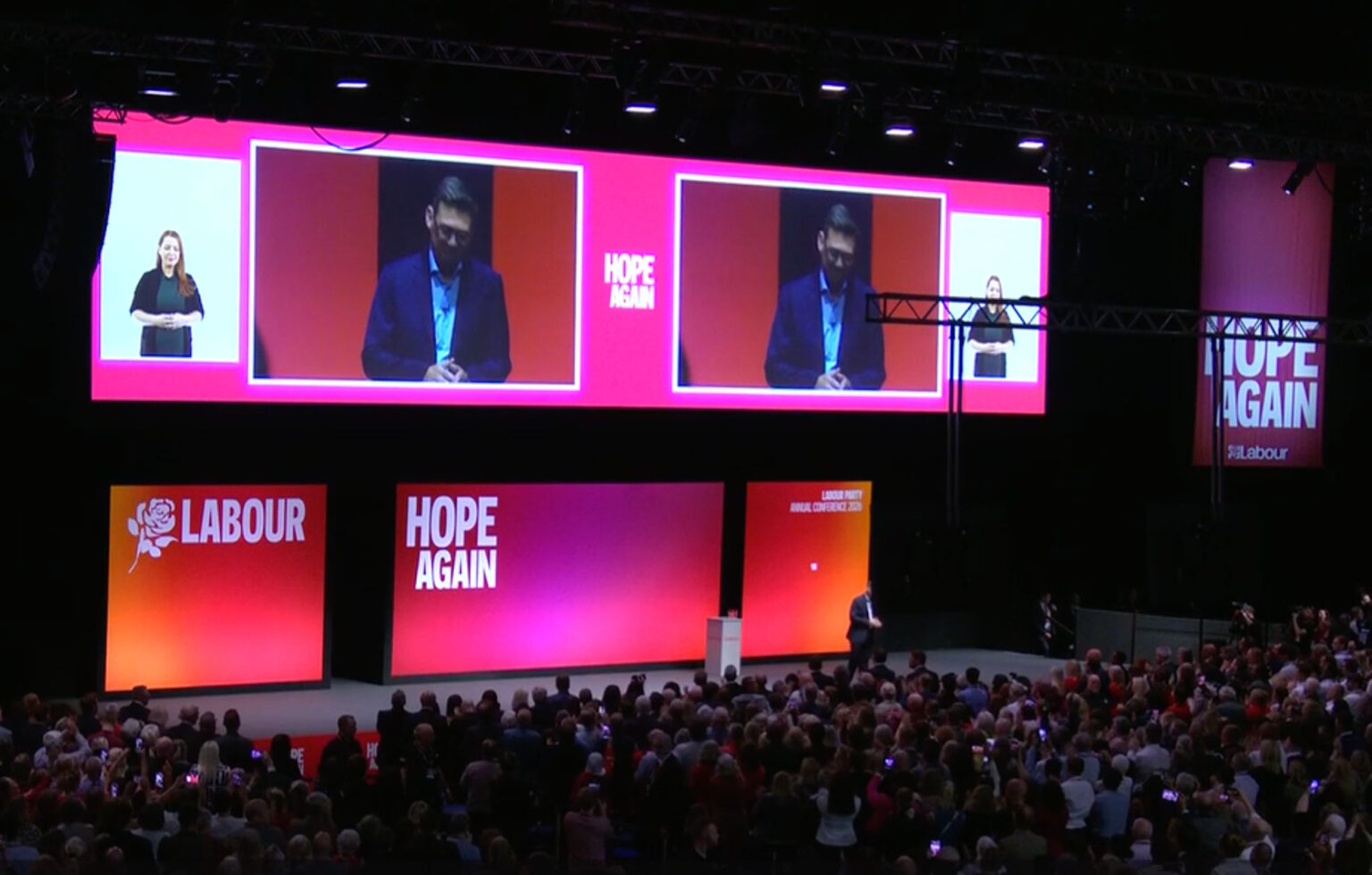

Andy Burnham used his first Labour Party Conference as Prime Minister to set out his vision for the country with greater public control of essential services, more power for cities and regions and public investment to support economic growth and private enterprise.
He described it as a “theory of growth” developed during his decade as Mayor of Greater Manchester: first bringing essential services — “energy, water, housing” — back under stronger public control, then devolving more power to local areas and creating better conditions for businesses to grow.
Housing will be the starting point for the government’s forthcoming 10-year Plan for Britain.
“With a good home, everything is possible. Without one, it feels like nothing is,” Burnham told delegates.
Labour’s plans for the housing market
The Prime Minister made clear that the government intends to treat housing as more than simply a market, describing the approach of the past 40 years as flawed and arguing that a home should instead be regarded as an essential needed for a good life.
And he was also explicit about how he sees the relationship between greater public control and private enterprise.
“When people hear the phrase public control, I am sure some think it’s anti-business. It’s the opposite,” he said.
Burnham promised what he described as “the biggest council house building programme since the post-war era”, alongside greater use of unused public land and reforms to Right to Buy. Existing tenants will retain the right, but it will be removed from newly built council homes so they remain in the public housing stock.
He also linked greater investment in council housing to lower government spending elsewhere, arguing: “If we build a generation of council homes, we will save billions from the housing benefit budget over the decade.”
Councils will also receive greater powers to take control of long-term empty homes and bring them back into use.
Leasehold reform is another part of the programme, with legislation promised before Christmas and further action planned on ground rents and administration and permission fees.
“To the millions of leaseholders across the country, you have my word,” Burnham said. “The days of you being squeezed for every penny are coming to an end.”
Higher expectations of landlords
For the buy-to-let sector, one of the most significant announcements was the Prime Minister’s plan to give councils greater powers over the poorest-quality private rented homes.
Landlords renting out the worst properties would first be warned to make improvements. If they refused, the government would make it easier for councils to compulsorily purchase those homes, with legislation promised if necessary.
“We don’t let people sell food which damages health. So why allow it with homes?” Burnham said.
The proposal follows the Renters’ Rights Act, which came into force in May and introduced major changes to how England’s private rented sector operates.
The latest measure is specifically aimed at the worst-quality properties where landlords refuse to make improvements, rather than the wider private rented sector.
A more professional property sector
The professionalisation of the sector was another clear theme to emerge from the conference.
Housing Secretary Angela Rayner announced independent regulation of estate agents, letting and managing agents, with mandatory licensing and qualifications.
An independent regulator will set and enforce standards, with agents ultimately able to lose their licences if they fail to comply.
Rayner acknowledged that there are “many decent businesses” operating in the sector, but said they were being undermined by “cowboys, crooks and con artists”.
The reforms will introduce mandatory professional standards for the businesses landlords use to let and manage their properties.
They also mark a significant step beyond the government’s previous roadmap, moving from a proposed non-statutory code towards statutory licensing and independent regulation.
Stimulation as well as intervention
Not all of the government’s intervention in the housing market, though, is about tightening the rules
Burnham used his speech to promote Your First Home, the new Help to Buy-style scheme intended to help first-time buyers onto the property ladder.
The expected structure will allow qualifying buyers to purchase new-build properties with deposits of 2.5%, supported by government equity loans worth up to 20% of the property’s value.
He said the scheme would “open up home ownership to those not backed by the bank of mum and dad”.
By supporting buyers at the bottom of the market, the scheme is intended to generate additional demand for new homes and provide a boost to housebuilding. It is part of the government’s wider aim of supporting a healthy and active private housing market.
Tax is biggest unknown
The Prime Minister has made clear that tax decisions will be announced at fiscal events rather than at the Labour Party Conference. The government’s approach to property taxation will therefore only become clear when Chancellor John Healey delivers the Budget on 28 October.
Among the measures reportedly being considered is lowering the threshold for the new High Value Council Tax Surcharge, commonly referred to as the mansion tax, from £2 million to £1.5 million.
So what does it all mean for the housing market?
Taken together, the government’s housing announcements suggest it wants private investment and enterprise to remain central to the housing market, but within a more regulated, professional and controlled system. That means greater government and local authority intervention alongside support for housebuilding and homeownership.
Labour’s housing announcements at a glance
Your First Home: Qualifying first-time buyers are expected to need deposits of just 2.5%, supported by government equity loans of up to 20% of the property’s value. The loans will initially be interest-free, with income limits and regional property price caps also expected. Full details are due in the Budget.
Property agent regulation: Estate, letting and managing agents will be required to hold licences and appropriate qualifications and will be overseen by an independent regulator, which will have powers to enforce standards and remove licences.
Poor-quality rental homes: Landlords of the worst-quality properties will first be required to make improvements. Where they refuse, the government plans to make it easier for councils to compulsorily purchase the properties.
Council housebuilding: Burnham has promised what he describes as the biggest council housebuilding programme since the post-war era, including greater use of unused public land.
Right to Buy: Existing council tenants will retain their rights, but newly built council homes will not subsequently be available through Right to Buy, keeping them in the public housing stock.
Empty homes: The qualifying period before councils can seek an Empty Dwelling Management Order will be cut from two years to six months. The orders allow councils to take over the management of qualifying empty homes and bring them back into use, although ownership remains with the owner.
Leasehold reform: A Leasehold Reform Bill is promised before Christmas, alongside action on ground rents and plans to cap administration and permission fees.
Social housing: Housing associations will be required to give councils 60 days’ notice before selling social homes, giving local authorities and other social housing providers an opportunity to buy them first.
Homelessness: Councils will be able to refer homeless households directly to registered housing providers, rather than relying solely on their own housing stock.
10-year Plan for Britain: Due later this year, the plan will set out the government’s longer-term programme for greater public control of essential services, further devolution of power to cities and regions and economic growth. Housing will be its starting point.
Picture credit: BBC News