
Over the last decade, Greater Manchester has outpaced the wider UK economy, but its next phase of growth is focused on spreading opportunity beyond the city centre and into underperforming towns.
The expansion of the Good Growth Fund to £2bn marks a shift in how regeneration across the region will be financed and delivered. The fund, controlled by the Greater Manchester Combined Authority (GMCA) and backed by a £675m injection from central government and the National Wealth Fund, is designed to unlock schemes that would otherwise struggle to proceed on viability criteria alone.
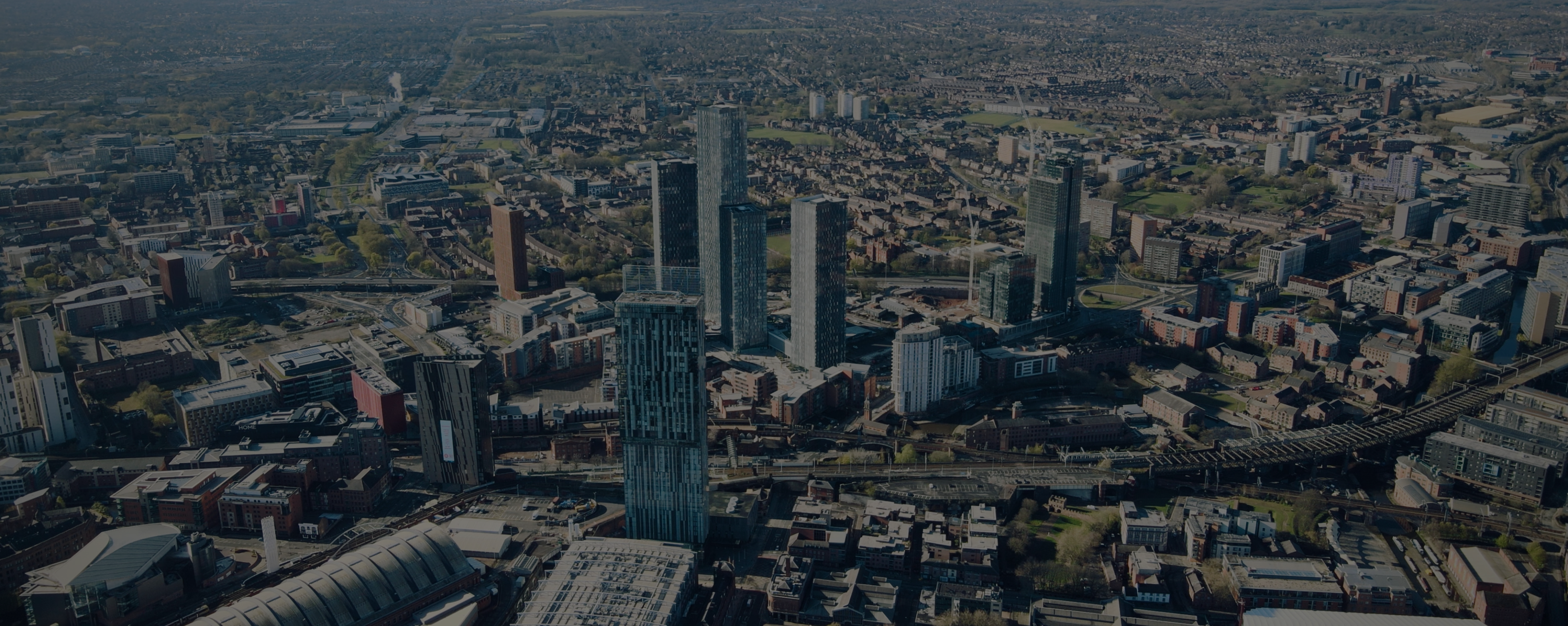
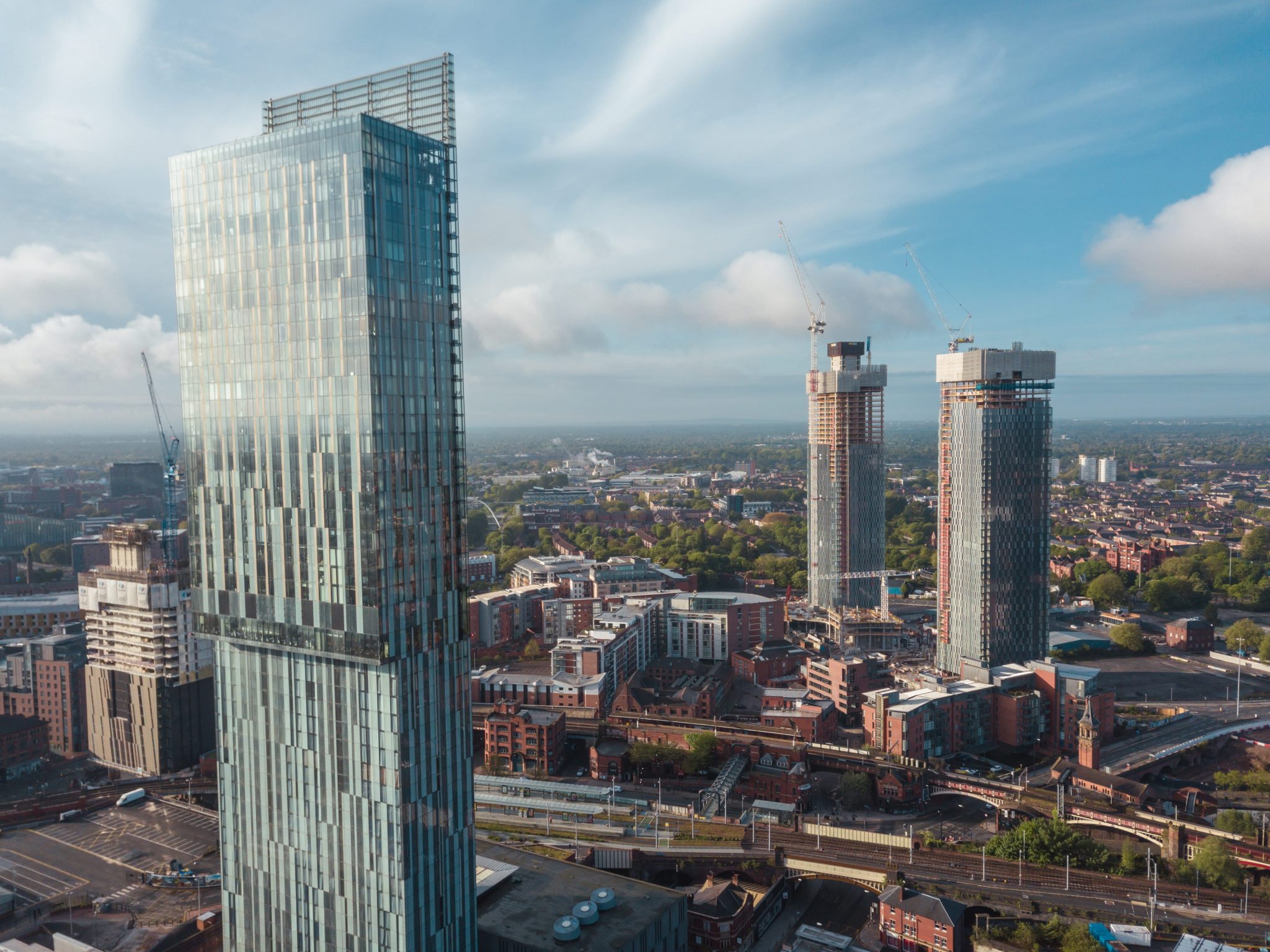
According to analysis by Joey Gardiner, a journalist specialising in construction and regeneration at Building, it has already delivered strong results. Between 2015 and 2023, Greater Manchester grew at roughly twice the rate of the national economy, with output exceeding £100bn.
Consistent regeneration strategy
This growth has been underpinned by a consistent regeneration strategy, anchored around a strong Manchester and Salford city centre and supported by coordinated planning across the ten local authorities. Major schemes including Spinningfields, MediaCity and Ancoats have reshaped the urban hearts of Manchester and Salford, attracting both capital and occupiers.
The approach has been to prioritise the economic strength of Manchester and Salford, with the expectation that success in those core areas would spread into the surrounding areas. However, this has led to some uneven outcomes, with towns such as Oldham, Rochdale and Bolton seeing more limited benefits from the city region’s expansion.
The Good Growth Fund is intended to address this imbalance. By taking a portfolio approach, the combined authority can support projects in locations where returns are less certain, helping to bridge viability gaps that have historically restricted development.
“Evergreen” funding
A key feature is its use of recyclable or “evergreen” funding, allowing capital to be reinvested into future schemes and creating a longer-term pipeline of projects, rather than relying on one-off grant allocations.
Alongside the fund, Greater Manchester is expanding the use of mayoral development corporations and designated growth zones. Stockport is a recent example, where town centre regeneration has delivered around 1,200 homes and new commercial space. Similar structures are now being introduced in locations including Bolton, Oldham and the Northern Gateway.
According to Gardiner, these frameworks bring planning, infrastructure and funding into closer alignment, offering a clearer route for regeneration delivery across the combined authority area.
Fiscal devolution
Further changes may come through proposed fiscal devolution, which would give city regions greater control over how funding is raised, retained and spent locally, rather than relying on central government allocations. This could include powers over taxation, borrowing and long-term investment planning, strengthening their ability to deliver large-scale projects.
What distinguishes Greater Manchester from many other UK regional economies is the consistency of its long-term strategy. Rather than relying on short-term funding cycles, the region has continued to pursue a defined regeneration vision, using a mix of public and private capital to support delivery.
The next phase will determine whether that model can be extended more evenly across the wider city region. If successful, it would mark a shift from concentrated city-centre growth towards a broader distribution of development activity across towns that have historically seen less investment.