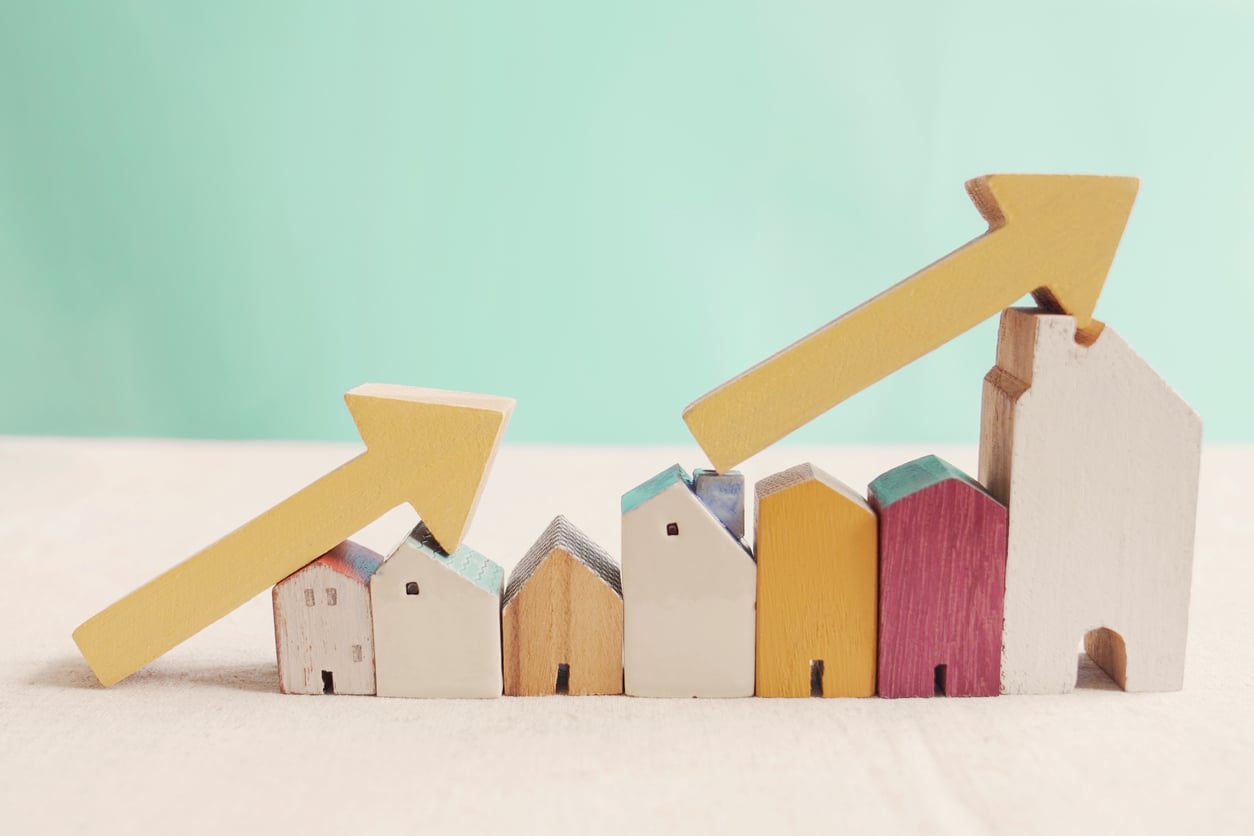

The latest analysis from Rightmove reveals the price gap between a typical first-time buyer (FTB) home and a second-stepper property has reached its widest level on record.
As FTBs are key drivers of the housing market, this has a knock-on effect all the way up the housing ladder, especially in areas where affordability is already stretched, and the gaps are at their widest.
In March, the average asking price for a 0–2 bedroom first-time buyer home was £226,955. Moving up to a typical three- to four-bedroom mid-market second-stepper property now costs £345,857.
That is a £118,902 or 52% price jump between the first and second rungs of the housing ladder. In cash terms, the gap has only been larger on two previous occasions, in May and June 2025, but proportionally it is now the widest on record.
Moving up the ladder also now requires a significantly larger deposit. Buyers aiming to build up a 20% deposit would need to increase their savings target from £45,391 on a typical first home to £69,171 for a second-stepper property. That’s an additional £23,780, which would need to come from either mortgage repayments, savings or house price growth.
Big regional variations
Regional differences mean the gap can be even wider. The South East has the largest gap between first-time buyer homes and second-steppers. A typical starter property costs £286,748, while a mid-market second-stepper home averages £460,781 – a 61% difference.
London is next with a 60% gap, rising from £491,661 for a typical first-time buyer home to £788,528 for a second-stepper property.
In contrast, the step up is considerably smaller in northern England. In Yorkshire and The Humber, a typical first-time buyer home costs £182,029, while a second-stepper property averages £251,885, a 38% increase. Wales has the second smallest gap of all, at 40%.
Growing gap between flats and houses
Rightmove says the widening gap is the result of diverging price growth between flats and houses. Flats account for a larger share of first-time buyer purchases but have seen slower growth over the past decade.
The average asking price of a flat is £301,338, compared to £379,526 for a house – a difference of 26%. Over the past ten years, the price of flats has increased by 8%, compared to 34% for houses.
That differential accelerated after the pandemic. In February 2020, before the first lockdown, the price difference between an average flat and a house was £24,010. By February 2026, the gap had widened to £78,198.
And, according to Rightmove’s property expert Colleen Babcock, the pandemic-era demand for larger homes continues to influence the market.
“The race for space that began during the pandemic caused a major shift between houses and flats, and it’s a shift we’re still feeling today.
Concerns over leaseholds and ground rents
“Flats, which make up a much larger share of first-time buyer homes and markets like London, have seen slower price growth, while houses have pulled further ahead. Concerns around leaseholds and ground rents are also likely weighing on flat prices.”
Rightmove mortgage expert Matt Smith says moving up the housing ladder typically relies on homeowners building equity in their first property.
“Inevitably, trading up means borrowing more. Home movers usually take advantage of having built equity since the purchase of their first home to fund a larger deposit, meaning they have access to cheaper rates.
“If equity is reduced, this means home movers are likely to need to look at alternative strategies, either through reducing their mortgage balance by overpaying, or boosting their deposit through savings.
“They can look at taking more incremental steps up the housing ladder, or scout out alternative, cheaper locations.
“If buyers are facing the prospect of moving up the ladder at higher Loan-To-Values, lenders do have options to support this, powered up by recent changes to affordability rules by the regulators.”