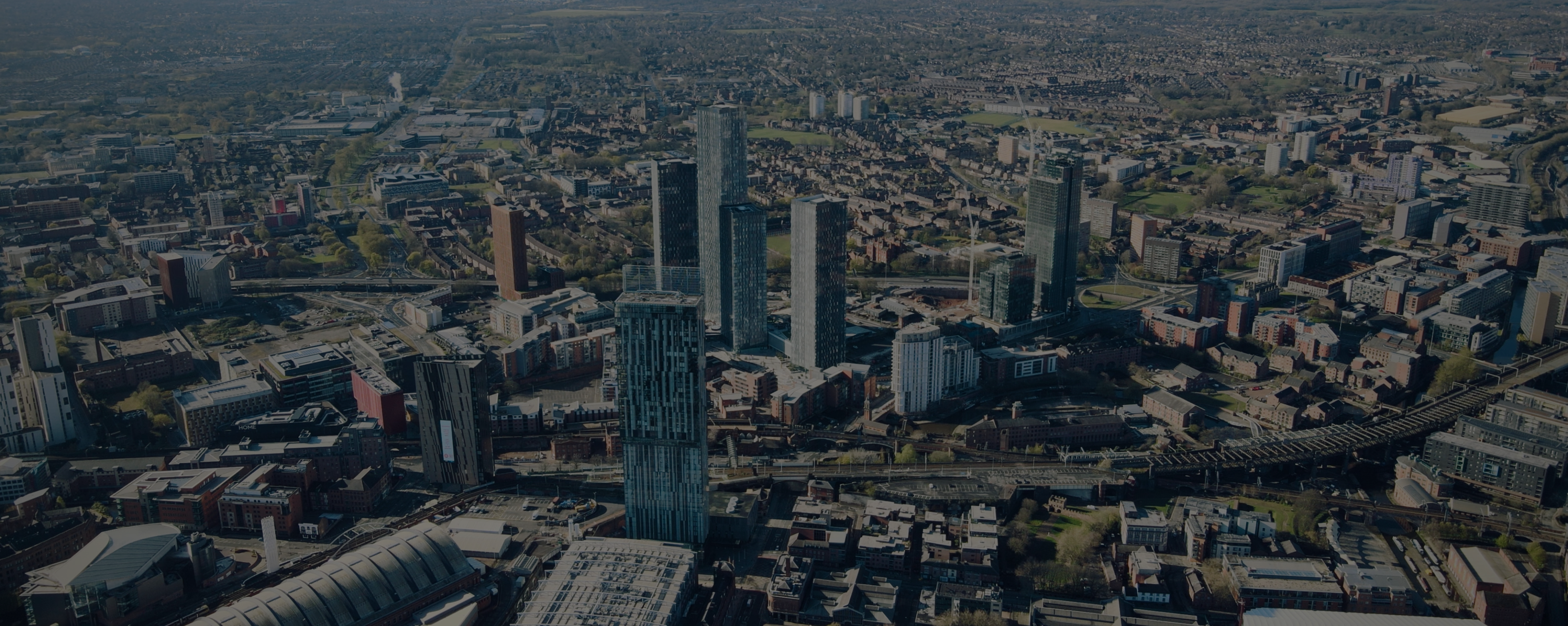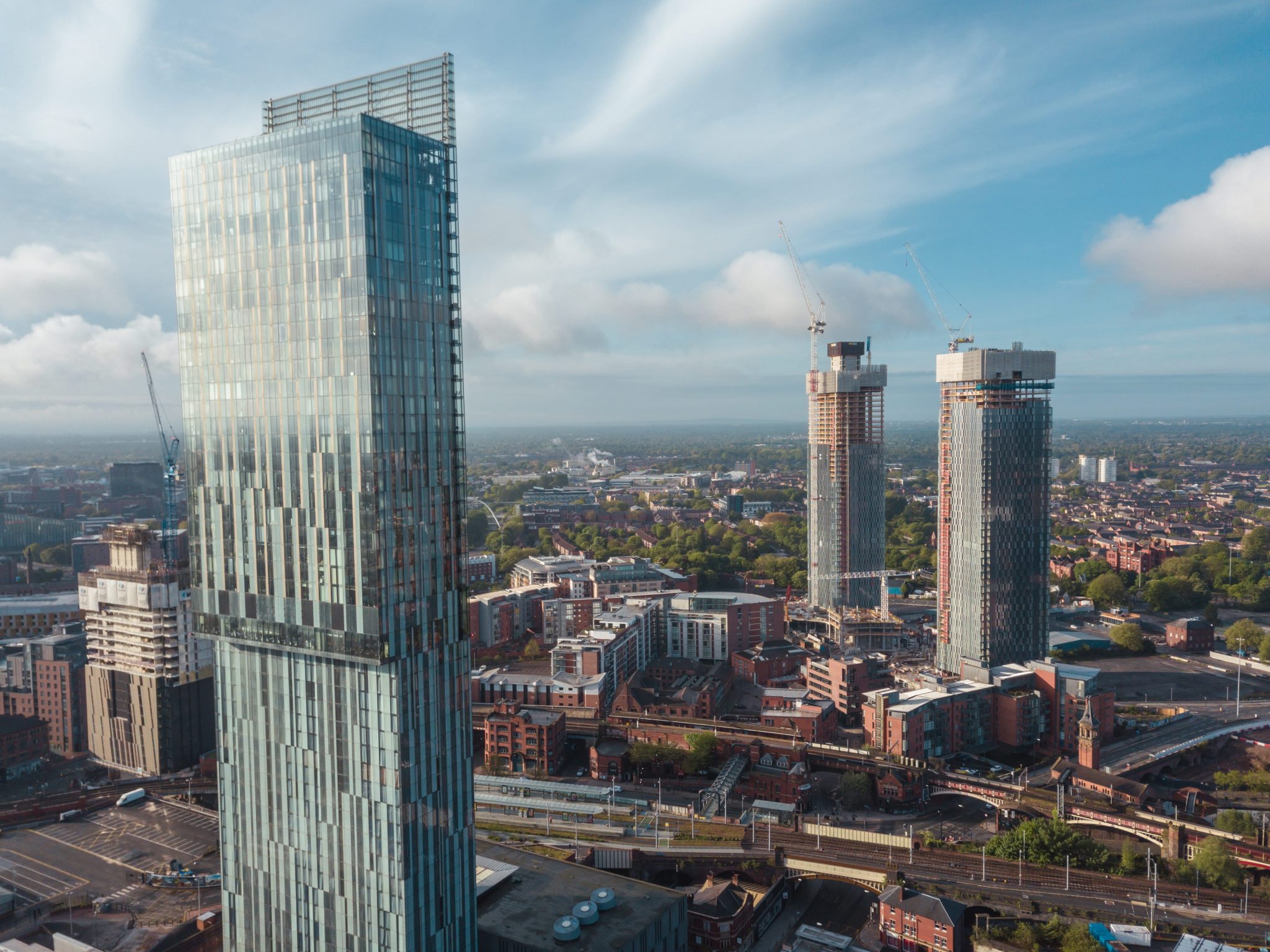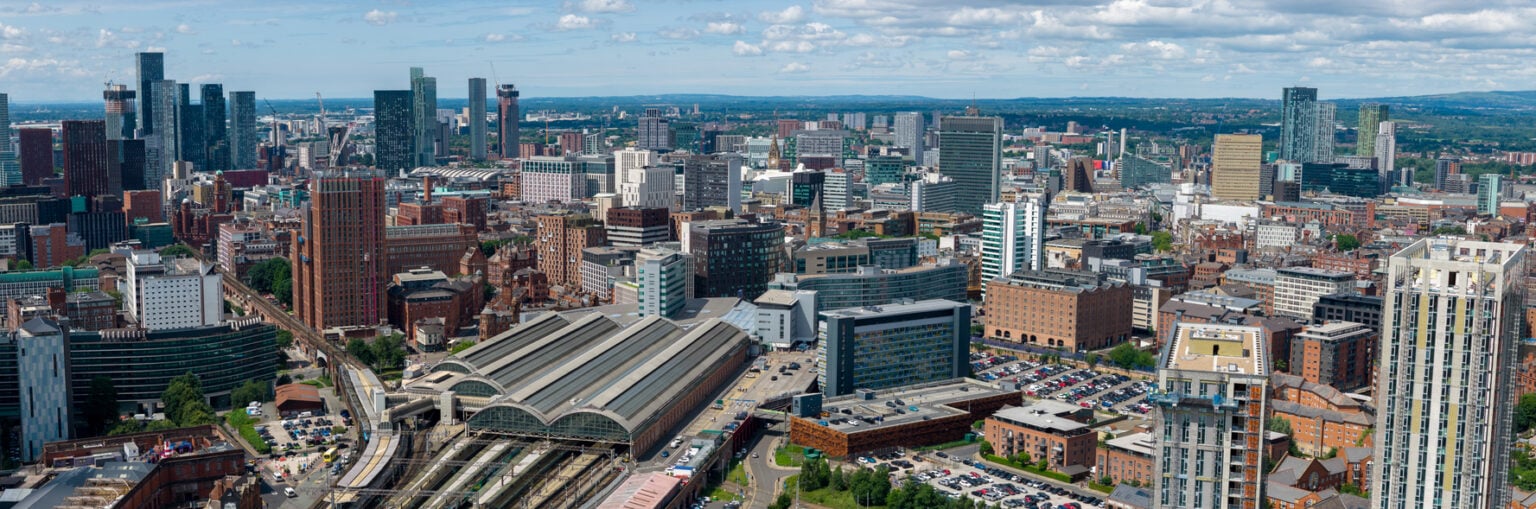

As affordability constraints limit any potential returns in much of the South, Manchester has emerged as one of the UK’s strongest-performing property markets, with inward investment producing high levels of growth and demand in central locations such as Piccadilly and the surrounding regeneration zones.
The latest figures show the average property price in Manchester is currently around £254,000. Flats, which make up a large proportion of stock in central areas, are typically around £199,000, while terraced homes are closer to £230,000–£240,000. Semi-detached properties average roughly £300,000, with detached homes exceeding £450,000 in higher-value areas.
Annual price growth in Manchester is running at 4–5%, compared to around 0–1% in London over the same period.
The city’s rental growth has been even stronger in recent years. Average monthly rents are now around £1,345, having gone up by between 7 and 9%, although those rises have now eased to 2–3%. In areas around Piccadilly, though, rents tend to be even higher, reflecting greater demand for properties within walking distance of employment and transport links, as well as easy access to the adjacent employment zones.
Direct rail connections right across the UK
With Manchester Piccadilly Station providing fast and direct rail connections right across the UK, it also attracts both buyers and tenants who commute to other major cities such as London, Birmingham and Leeds.
Over the last decade or two, Manchester has seen very high levels of regeneration, and the Mayfield scheme is a good, recent example. Located behind Piccadilly, it is expected to deliver around 1,500 homes alongside more than 2.3 million sq ft of commercial space, as well as retail, leisure and public space, including Mayfield Park. When completed, it is anticipated that it will support over 13,000 new jobs.
Manchester’s regeneration is also extending its city centre eastwards. Areas including Ancoats and the Northern Quarter have already seen strong residential demand, driven by a mix of new-build apartments, converted industrial buildings and a growing independent retail and hospitality scene. Development around Piccadilly is connecting these districts to form a larger continuous urban core.
Strong pipeline of new projects
In addition, the Manchester Piccadilly Strategic Regeneration Framework has set out plans for more development around the station, with additional homes and employment space to be delivered in phases over the coming years.
And there are yet more infrastructure proposals in the pipeline, which will bring improvements over the longer term. Plans linked to Northern Powerhouse Rail include proposals for underground high-speed rail platforms at Piccadilly, which would increase capacity while freeing up land above the station for development.
As a result of Manchester’s expanding employment base and higher education sector, there is a healthy level of demand for all these new developments, too. In recent years, the city has attracted substantial new businesses in the finance, technology and media sectors, while the University of Manchester and Manchester Metropolitan University together account for a student population of more than 88,000. A good proportion of those graduates then remain in the city, contributing to the quality of the local workforce and ensuring ongoing rental demand.
Piccadilly’s prospects could be even further boosted by Greater Manchester’s bid to host the Ryder Cup in 2035. It has also been proposed that a future UK Olympic bid could be made by a group of northern cities, including Manchester, which would raise its international profile and attract additional investment.