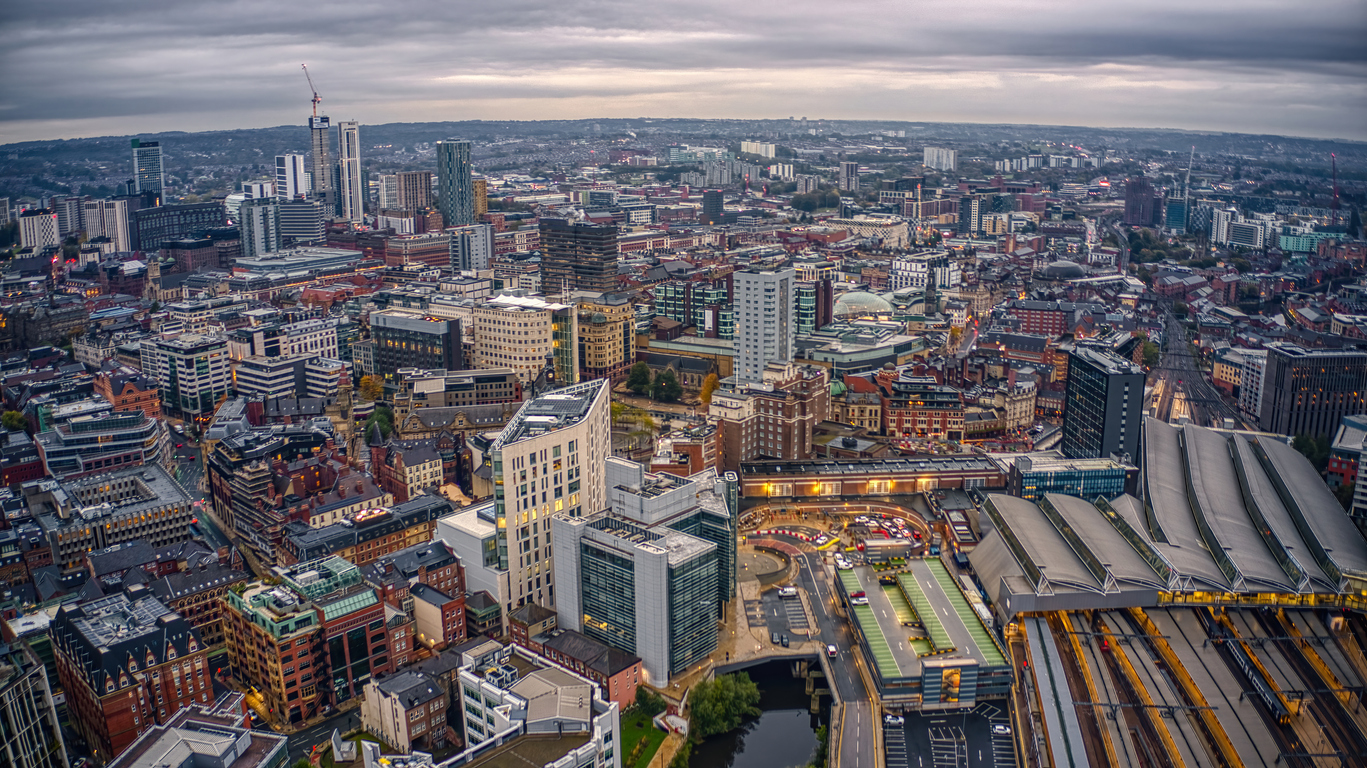

Leeds is one of the UK’s largest regional cities, with a population of more than 800,000 and around 2.3 million people in the wider city region.
It has been evolving into a major economic centre for the North of England, with strong financial services, legal, digital and professional sectors.
It’s the kind of scale and diversity of economy that are key to Leeds’ thriving housing market. It has also attracted substantial inward investment in recent years, with a growing employment base and a steady increase in city centre living driving high levels of demand for housing, particularly in central and the better-connected locations.
According to Office for National Statistics (ONS) data, the average property price in Leeds is approximately £245,000–£246,000. Flats are typically between £150,000 and £160,000, while semi-detached homes are closer to £260,000 to £270,000 and detached properties can be bought for around £450,000.
Annual price growth in Leeds is running at around 3–4%, compared to 0–1% in London, where average values are also double what they are locally at £520,000.
Strong rental performance
The city’s rental performance has been particularly strong. Average monthly rents are now hovering around £1,100, having increased by approximately 25–30% since 2020, with continued upward pressure driven by population growth, employment expansion and strong demand from graduates. This has resulted in buy-to-let yields of as much as 6–7%.
High levels of employment are the primary driver of this demand. Leeds has one of the most diverse economies outside London, with major employers in the finance, legal, healthcare and digital sectors. Their continued expansion has created a large and stable base of tenants and buyers, particularly in areas close to the city centre and the key commercial districts.
Higher education adds yet another substantial layer of demand. The University of Leeds and other institutions support a student population of more than 60,000, including a significant number of international students. A proportion of their graduates then remain in the city, converting into long-term tenants and house buyers and improving the quality of the city’s pool of workers.
Leeds’ housing market radically reshaped
At the same time, regeneration has been radically reshaping Leeds’ housing market. The city is undergoing large-scale development across multiple sites, transforming former unloved industrial areas into mixed-use districts, with a number of schemes already underway and others forming part of a longer-term pipeline.
One of the more notable examples is the proposed Elland Road regeneration scheme, which is part of a £2bn joint venture. The project will deliver new housing, commercial space and leisure facilities, and is part of a wider long-term plan to create a year-round destination in the south of the city, with delivery expected to take place over a number of phases.
The Elland Road corridor will also see up to 2,000 new homes delivered alongside infrastructure and public realm improvements, further expanding the city’s residential and economic footprint over the coming years.
Thousands of new homes
There are also a number of other major schemes, including South Bank regeneration, which is one of the largest city centre regeneration programmes in Europe and is expected to deliver thousands of new homes, office space and public amenities.
In addition, as a major rail hub with direct links across the UK, Leeds also benefits from strong connectivity, supporting both commuter demand and business activity.
For investors, Leeds’ economic scale and diverse employment base mean it is a highly attractive location, with the potential for further growth as its many regeneration projects come to fruition.