
Electrical safety is one of a landlord’s most important legal responsibilities, but it’s also one of the most confusing.
Most are aware they need an Electrical Installation Condition Report (EICR), but few understand exactly what it covers, who is qualified to carry it out and whether it includes electrical appliances.
Part of the confusion is caused by rules that combine fixed legal requirements with industry best practice. Here’s what landlords need to know to stay compliant.
Electrical Installation Condition Report (EICR)
Landlords of most privately rented homes in England must have an Electrical Installation Condition Report (EICR) carried out at least once every five years.
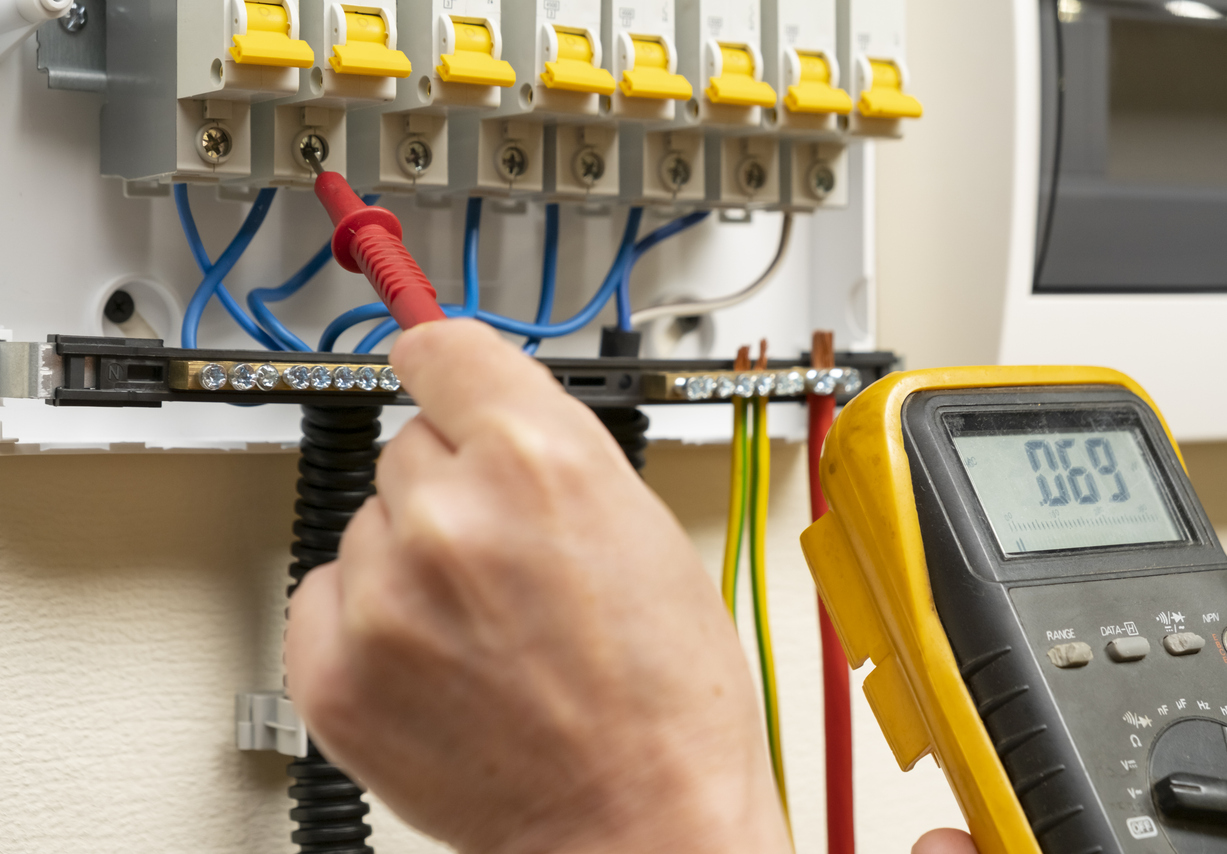
An EICR does not check everything electrical in the property. It only covers the fixed electrical installation, including the wiring, sockets, switches, light fittings, the consumer unit (fuse board) and any permanently connected electrical equipment.
The inspection should be carried out by what the Government describes as a “qualified and competent person”. In practice, many landlords choose an electrician registered with NICEIC or NAPIT, although membership of either organisation is not a legal requirement.
The report will either be satisfactory or unsatisfactory. An unsatisfactory report will identify any remedial work or further investigation needed before the installation meets the required safety standard.
It may also include recommendations for improvement, such as replacing electrical components that are approaching the end of their expected lifespan. These are advisory only and will not affect the overall outcome.
Any required remedial work or further investigation must normally be completed within 28 days. Once completed, landlords must obtain written confirmation that the work has been carried out and provide this to the local authority and any existing tenants. New tenants should receive a copy of the EICR before they move in. Landlords must also provide one to prospective tenants if requested and to the local authority within seven days of a request.
Failing to comply with the electrical safety regulations can have serious consequences. Local authorities have the power to enforce the rules and can impose financial penalties of up to £40,000 for certain breaches. More importantly, electrical faults can increase the risk of electric shock and fire.
An EICR typically costs between £100 and £300, depending on the property’s size, the number of electrical circuits and where it’s located. Any remedial work will usually be charged separately.
What about electrical appliances?
Portable appliances that are supplied as part of the tenancy are not covered by an EICR. However, if landlords provide items such as a washing machine, fridge, microwave, kettle, toaster or lamps, they are responsible for ensuring they are safe to use.
Unlike the property’s fixed electrical installation, there is no legal requirement to have these appliances tested at set intervals. Landlords should check them regularly for signs of damage and replace faulty items promptly. If a defective appliance causes an electric shock or starts a fire, they could face enforcement action or civil claims, as well as putting their tenants at risk.
Many landlords therefore choose to have Portable Appliance Testing (PAT) carried out, particularly between tenancies.
PAT testing is generally priced according to the number of appliances being inspected. Many electricians charge a minimum call-out fee of around £40 to £60, with the final cost depending on the number of appliances being tested.
Keeping on top of compliance
A landlord’s electrical safety checklist should include:
- Arranging an EICR every five years.
- Using a suitably qualified electrician to carry out the inspection.
- Giving tenants a copy of the EICR within the required timescales.
- Completing any remedial work or further investigation identified in the report.
- Keeping the EICR and any confirmation of remedial work.
- Checking that any appliances supplied with the tenancy remain safe and in good working order.
- Replacing damaged or faulty appliances promptly.
- Landlords should also consider PAT testing as an additional safeguard, particularly for HMOs, furnished properties and older appliances.
As with all regulations, electrical safety rules are subject to change, so it’s worth checking the latest guidance to make sure you remain compliant.
Useful resources
GOV.UK – Electrical safety standards in the private rented sector
GOV.UK – Landlord safety responsibilities
Health and Safety Executive (HSE) – Portable appliance testing guidance