
With Andy Burnham soon to become Prime Minister, attention is turning to how he will fund Labour’s spending plans while maintaining the party’s commitments not to increase income tax, National Insurance or VAT.
One potential area for raising additional revenue is property taxation, and there has been increasing speculation that this might include a land value tax.
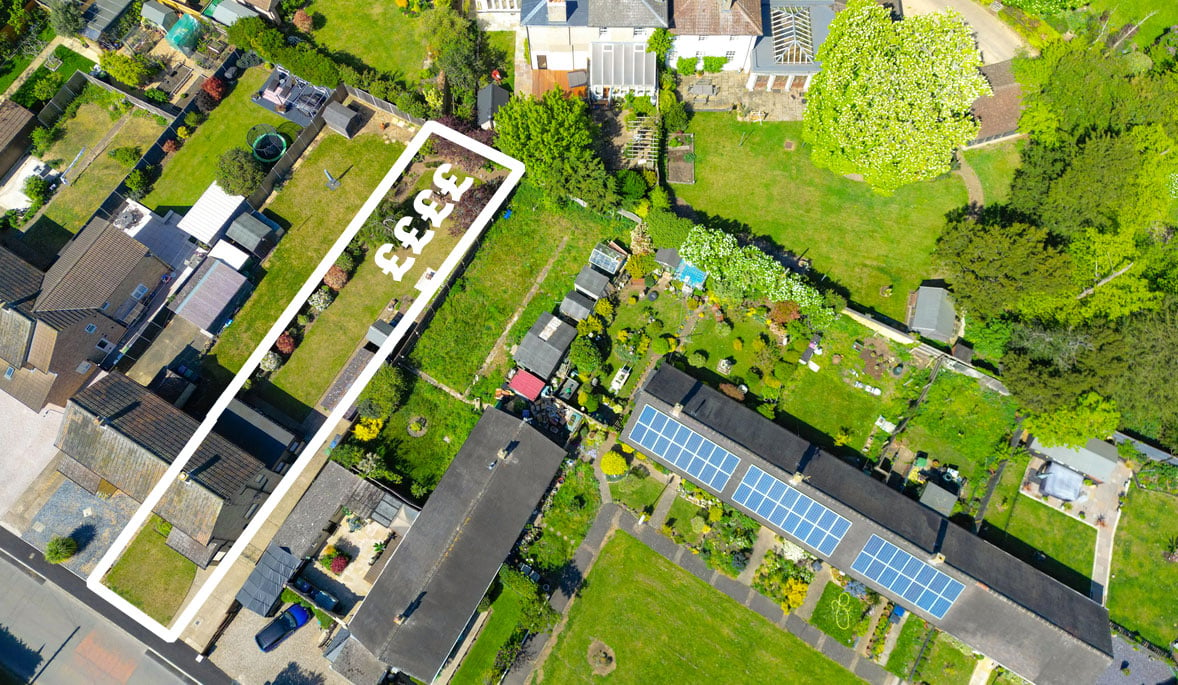
Unlike council tax, which is based on the value of a property, a land value tax is levied on the value of the land beneath it. Proponents argue that it could help encourage the development of underused land. At the same time, replacing stamp duty could also reduce barriers to moving home and improve mobility within the housing market.
To assess what it might mean in practice, Tax Policy Associates modelled the impact of replacing council tax and stamp duty with a revenue-neutral land value tax across England.
The winners and losers
The analysis reveals around 69% of households would pay less than they do under the current system, while 31% would pay more. However, those headline figures conceal some dramatic differences. Around 576,000 homes would face annual tax bills of more than £10,000, while more than 21,000 properties would pay over £50,000 a year.
At a regional level, much of the North and Midlands emerge as the biggest beneficiaries, with many of the largest increases concentrated in London and parts of the South East, where land values are highest.
The report identifies some of London’s most expensive boroughs as among the biggest losers, including Kensington & Chelsea, Westminster and Camden. In contrast, many areas in northern England and coastal communities will be beneficiaries of the new tax system as a result of their lower land values.
But the most striking divide may not be geographical at all.
Key factors
Under a land value tax, what really matters is not the value of the home itself but the value of the land it occupies. That means some owners of relatively modest properties could find themselves paying considerably more than owners of more expensive homes elsewhere.
An example could be a retired homeowner living in a bungalow on a large plot in an affluent area. Although the property itself may be relatively modest, the land beneath might be highly valuable. In contrast, the owner of a luxury city-centre apartment may benefit because the land beneath a tower block is shared between dozens or even hundreds of flats.
As a result, some of the biggest losers could be asset-rich but cash-poor homeowners who have seen land values rise around them over many years without enjoying a similar increase in income.
The practicalities
While the tax specialist’s modelling provides a fascinating insight into how a land value tax could redistribute the property tax burden, implementing such a system would be far from straightforward.
One of the biggest questions is who will ultimately bear the cost. The tax would be levied on landowners, meaning landlords would initially receive the bill, but the extent to which those costs could be passed on to tenants remains unclear. And what about freeholders?
The valuation process is another challenge. Unlike council tax bands, a land value tax would require millions of individual plots to be assessed. Even though some sites are relatively straightforward to value, others are not. A large garden might appear valuable on paper, but what if there is no road access and planning restrictions prevent development or the site is effectively landlocked? Small differences in how land is assessed could have a significant impact on tax bills.
The scale of the task could also be substantial. Even if only a small proportion of homeowners challenged their assessments, the result could be hundreds of thousands of appeals, adding considerable administrative costs.
And history suggests governments should tread carefully when reforming property taxes. Margaret Thatcher’s attempt to replace domestic rates with the poll tax became one of the most controversial reforms of her premiership and contributed to her downfall.
What does it mean for investment?
Tax Policy Associates’ modelling suggests that any move towards a land value tax could further shift investor focus towards regional markets and higher-density developments.
Although much of the debate will inevitably focus on London’s biggest losers, many northern and Midlands locations appear likely to compare favourably under such a system. Equally, apartment owners may be better insulated than owners of low-density housing because the underlying land value is shared across multiple units.
However, the report also highlights the huge uncertainty involved in any potential reform. Questions over valuation, liability and implementation are unlikely to be swiftly resolved, and the political challenges of overhauling property taxation are considerable.
The modelling may offer a glimpse of how a land value tax could reshape Britain’s property market, but it also demonstrates why such reforms are far easier to model than to implement.