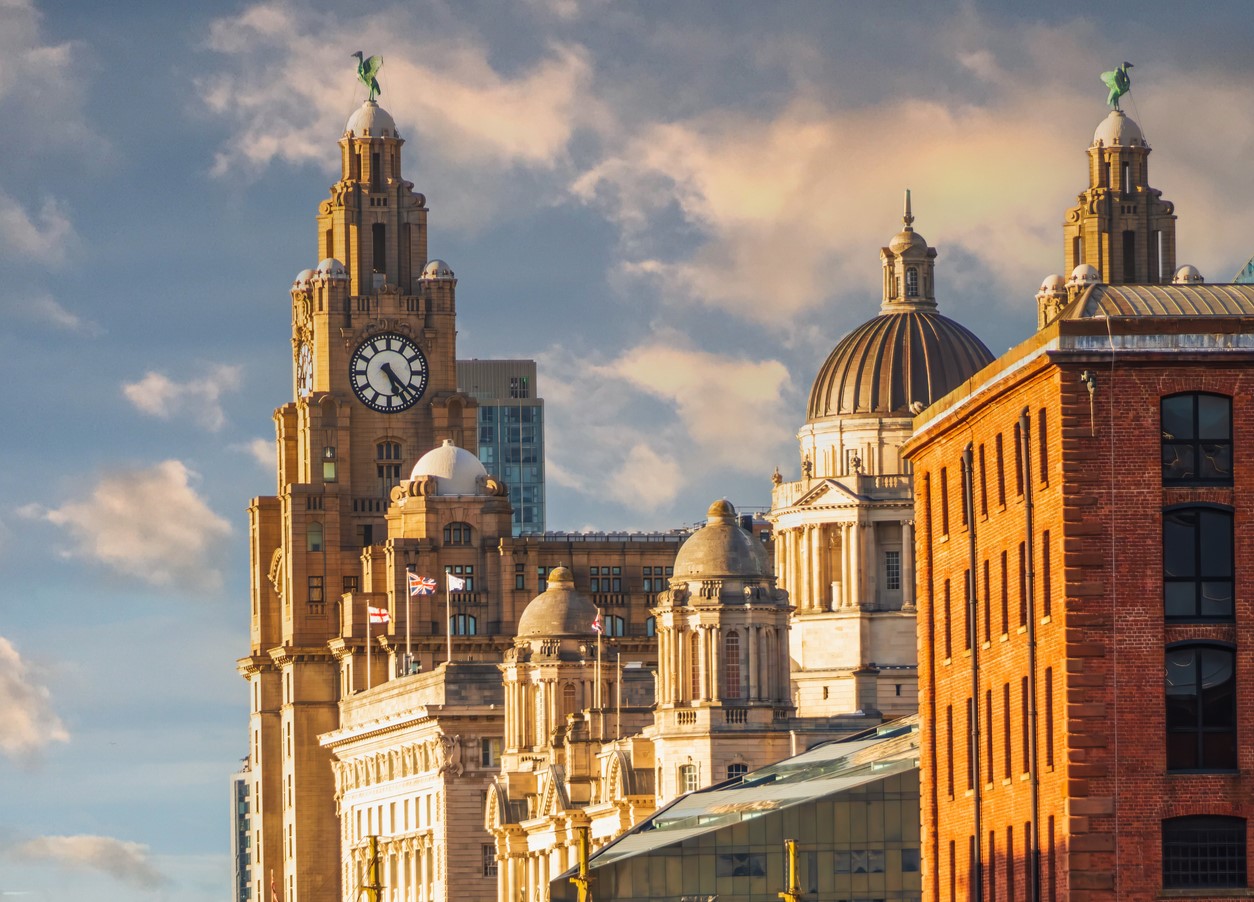

Liverpool’s transformation over the past 25 years is one of the UK’s most striking urban regeneration stories.
Once associated with declining docklands, underused industrial land and struggling city-centre districts, the city has undergone a sustained programme of investment that has reshaped its economy, waterfront and property market.
Its regeneration journey offers a case study in how long-term public and private sector investment can change both perceptions and prospects.
The catalyst for much of the city’s modern revival was Liverpool ONE. Completed in 2008 following a £1 billion investment backed by Grosvenor and Landsec, the mixed-use development effectively rebuilt a significant section of the city centre. Combining retail, leisure, residential and public spaces, it helped reposition the city as a major regional destination and created a new commercial heart for Liverpool.
Wider regeneration programme
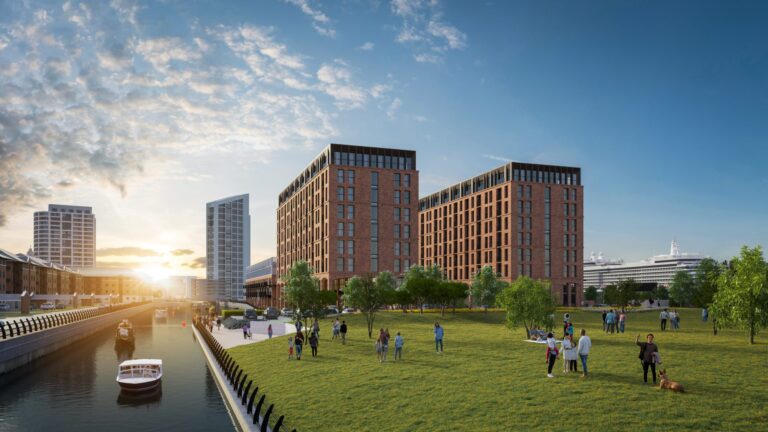
The scheme arrived alongside wider efforts to rejuvenate the waterfront and reconnect the city with its historic docklands. The opening of the M&S Bank Arena in 2008 transformed former dockland into a major entertainment destination, helping to attract visitors, events and investment to the waterfront area.
Since then, regeneration activity has spread across the city. The Museum of Liverpool and the Mann Island development introduced modern architecture to the waterfront while adding new residential and commercial space. At the same time, Liverpool Waters emerged as one of Europe’s largest regeneration projects, with plans to transform large stretches of historic dockland into new neighbourhoods, commercial districts and public spaces.
The scale of Liverpool Waters is significant
The scale of Liverpool Waters is significant. The multi-billion-pound masterplan extends over decades, creating a pipeline of development that continues to attract businesses, residents and institutional investment. And, as large-scale regeneration projects often act as long-term confidence signals, it is encouraging further investment in the surrounding areas.
The effect of the city’s regeneration can clearly be seen in its housing market. Rightmove figures show average asking prices in Liverpool have risen by around 42% over the past decade, making it one of the strongest-performing cities outside the South East.
Despite that, Liverpool remains relatively affordable, with the average property value standing at around £217,000 compared with a UK average of £271,900 (Zoopla).
Liverpool’s success is not just based on property
Liverpool’s success is not just based on property; the city has also focused on creating a knowledge-based economy. The £2 billion Knowledge Quarter and Paddington Village developments are bringing together hospitals, research facilities, universities and life sciences businesses. The aim is to establish Liverpool as a major centre for innovation, healthcare and advanced research.
Employment growth is often one of the strongest drivers of housing demand. Expanding sectors such as healthcare, education and life sciences are helping to support demand for both owner-occupied and rental accommodation, particularly among younger professionals and graduates.
That demand has helped underpin Liverpool’s rental market despite a broader cooling across many parts of the UK. Official figures show average private rents in Liverpool reached around £901 per month in May 2026, up 6.2% year on year.
Buy-to-let investors
Liverpool also attracts buy-to-let investors because of its relatively strong rental returns. Zoopla estimates the average gross rental yield across the UK at around 5.8%, while many Liverpool neighbourhoods continue to deliver yields well above that level thanks to comparatively affordable purchase prices and solid tenant demand.
Infrastructure and public investment have also played a role. The completion of the new Royal Liverpool University Hospital is one of the city’s largest public sector projects, while ongoing investment in transport and public realm improvements has helped strengthen connectivity right across Liverpool.
Sport
Sport is another important part of the city’s regeneration story. Liverpool FC’s expansion of Anfield Stadium has increased capacity and enhanced the area’s profile, while Everton’s new £550 million stadium at Bramley-Moore Dock has transformed a historic dock site into a major new destination. Such projects can act as wider catalysts for local regeneration, supporting hospitality, leisure and residential development in surrounding districts.
Regeneration alone, though, does not guarantee investment success, but Liverpool’s experience demonstrates how sustained investment across retail, culture, education, healthcare and infrastructure can create the foundations for long-term economic growth.