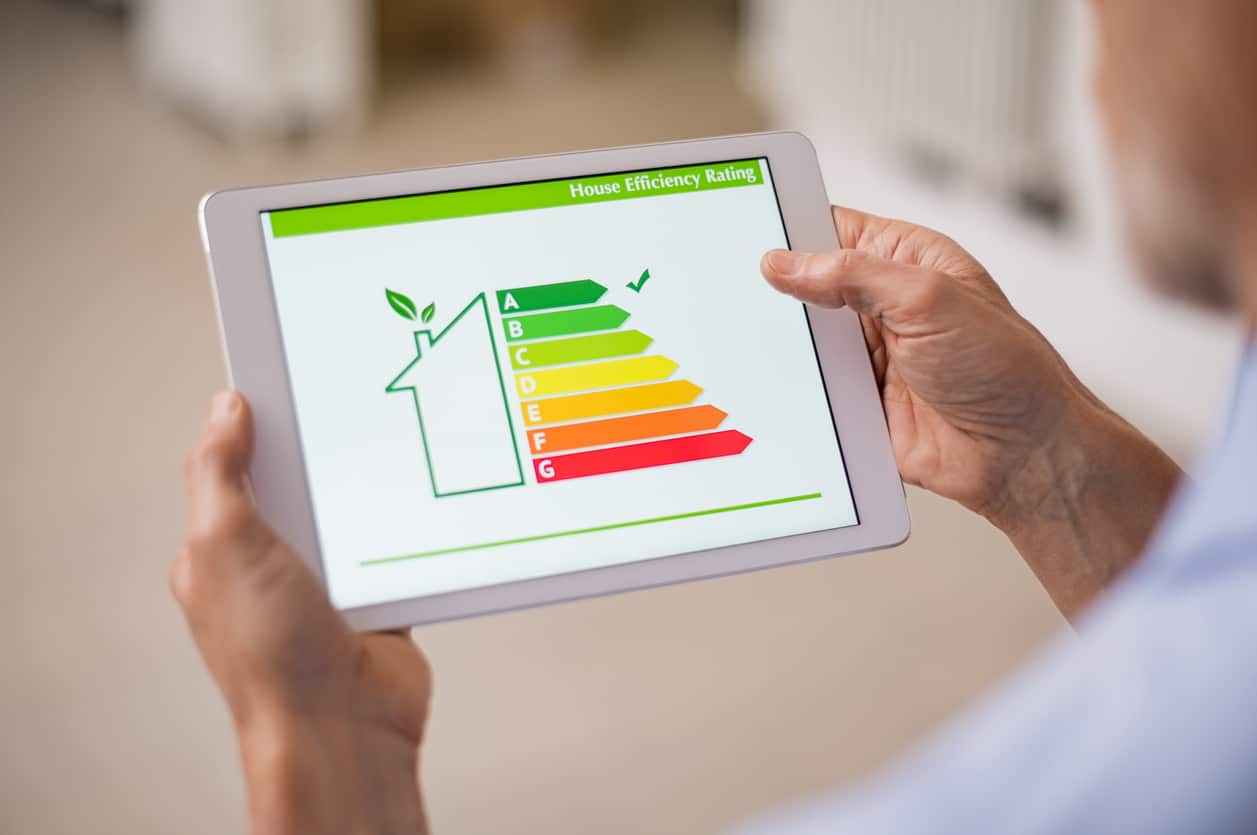

Homes with low energy performance ratings are selling at a marked discount to the rest of the market and could offer serious savings to buyers prepared to take on improvement works, according to new analysis carried out by international estate agency network eXp UK.
Rising energy costs have pushed EPC ratings higher up buyers’ priority lists and are now having a clear effect on asking prices. Lower-rated homes — often older properties — tend to be discounted to compensate for higher running costs or the upgrade work many purchasers expect will be required.
eXp examined asking prices for properties currently listed for sale in England with an EPC rating of E or below and found they are priced, on average, 7.1% beneath the rest of the market. That equates to a typical discount of £26,745 compared with homes with stronger energy performance.
Likely upgrade costs
The research also looked at likely upgrade costs. eXp UK estimates that improving a property from an EPC rating of E to C would cost around £11,780 on average. On that basis, buyers could still see a net saving of approximately £14,965 after carrying out the necessary energy-efficiency upgrades.
The scale of the discount, however, varies significantly across the country. In London, properties rated E or below are priced 6.5% beneath the average — equivalent to £54,422. After allowing for the estimated cost of remediation, the potential saving in the capital is as high as £42,642.
In the North East, the discount is calculated at £28,246, producing a projected saving of £16,466 once upgrade costs are deducted. Buyers in the South West and East of England could see potential savings of £16,021 and £14,888, respectively.
Moving down the rankings, the estimated post-improvement savings are £13,870 in the East Midlands, £10,780 in Yorkshire and the Humber, £10,656 in the West Midlands, £8,436 in the North West and £2,694 in the South East.
Clear and growing gap
Adam Day, head of eXp UK and Europe, said the figures reveal a clear and growing gap between lower-rated properties and the wider market.
“There’s no doubt that homes with lower EPC ratings can present a genuine opportunity for buyers looking to maximise value. In many cases, the price discount more than offsets the cost of bringing the property up to a C rating, leaving buyers with significant savings and a more energy-efficient home in the long run.”
Day added that buyers should look beyond headline savings and carefully assess the overall condition of a property before making a purchase.
“However, it’s important to recognise that poor EPC properties are often older homes that may have seen very few upgrades or renovations over time. While the headline discount is attractive, buyers may also need to factor in additional works beyond energy-efficiency improvements. These costs can quickly eat into the initial savings if they’re not properly accounted for.”
For buyers prepared to take on improvement works, lower-rated homes can offer a route into areas or property types that might otherwise be out of reach — provided the sums are checked carefully before committing, as costs can vary considerably from property to property.