
International buyers continue to hold a significant stake in England’s housing market despite repeated warnings that tax changes and non-dom reforms could trigger an exodus of overseas capital.
Research from high-end buying agency and property consultancy Jefferies London puts the estimated value of foreign-owned homes across England at £84.2bn, with London accounting for £43.9bn, more than half of the national total.
While the capital remains dominant, the analysis also reveals there has been a gradual broadening of international investor activity as attention increasingly turns to regions such as the North West, which are emerging more prominently in the data.
Jefferies London analysed estimates of foreign homeownership alongside average house price data to calculate the total market value of internationally held housing stock at both regional and local authority level. The findings show a market still anchored by London, but one where overseas buyers are widening their search in response to value, rental demand and long-term growth potential elsewhere.
London leads but longer dominates
Foreign-owned homes are spread across every region, yet the capital’s £43.9bn share highlights London’s continuing pull as a global wealth centre. Fourteen of the twenty most valuable local authority markets for foreign-owned housing are in the capital’s 14 boroughs.
The City of Westminster tops the rankings with £6.3bn worth of overseas-owned housing, followed by Kensington and Chelsea at £5.1bn. Tower Hamlets ranks third at £3.74bn, with Wandsworth (£3.13bn), Hammersmith and Fulham (£2.47bn) and Hounslow (£2.06bn) all above the £2bn mark, while Camden sits just behind at £2.00bn.
Damien Jefferies, Founder of Jefferies London, says the figures reflect enduring confidence rather than short-term investment flows.
“For overseas buyers, London remains one of the most attractive property markets on the global stage and, even with the various tax changes we’ve seen in recent years, the capital continues to attract international money because of its global reputation, depth of market and long-term appeal to high-net-worth buyers.”
He adds that the concentration of internationally owned housing demonstrates how central the city remains to global wealth.
“The fact that more than half of the total value of internationally owned homes sits within the capital underlines just how central London remains to global wealth, reflecting the long-standing confidence in the city as a place to live, invest and preserve capital.”
Moving out of the capital
The data also shows where international buyers are increasingly looking next. Outside London, the South East ranks second at £15.1bn and, a little further away, the East of England comes next at £6.0bn.
Buckinghamshire is the highest-ranked non-London authority, sitting within the overall top five at £2.98bn, while St Albans (£796m) also appears among the higher-ranked markets. Their inclusion indicates that overseas buyers are beginning to balance prime London exposure with markets offering more space, lower price points and easy transport links to the capital.
Midlands and the North rising up the rankings
At a regional level, the North West accounts for £7.3bn of foreign-owned housing stock, making it one of the most valuable areas outside the South East.
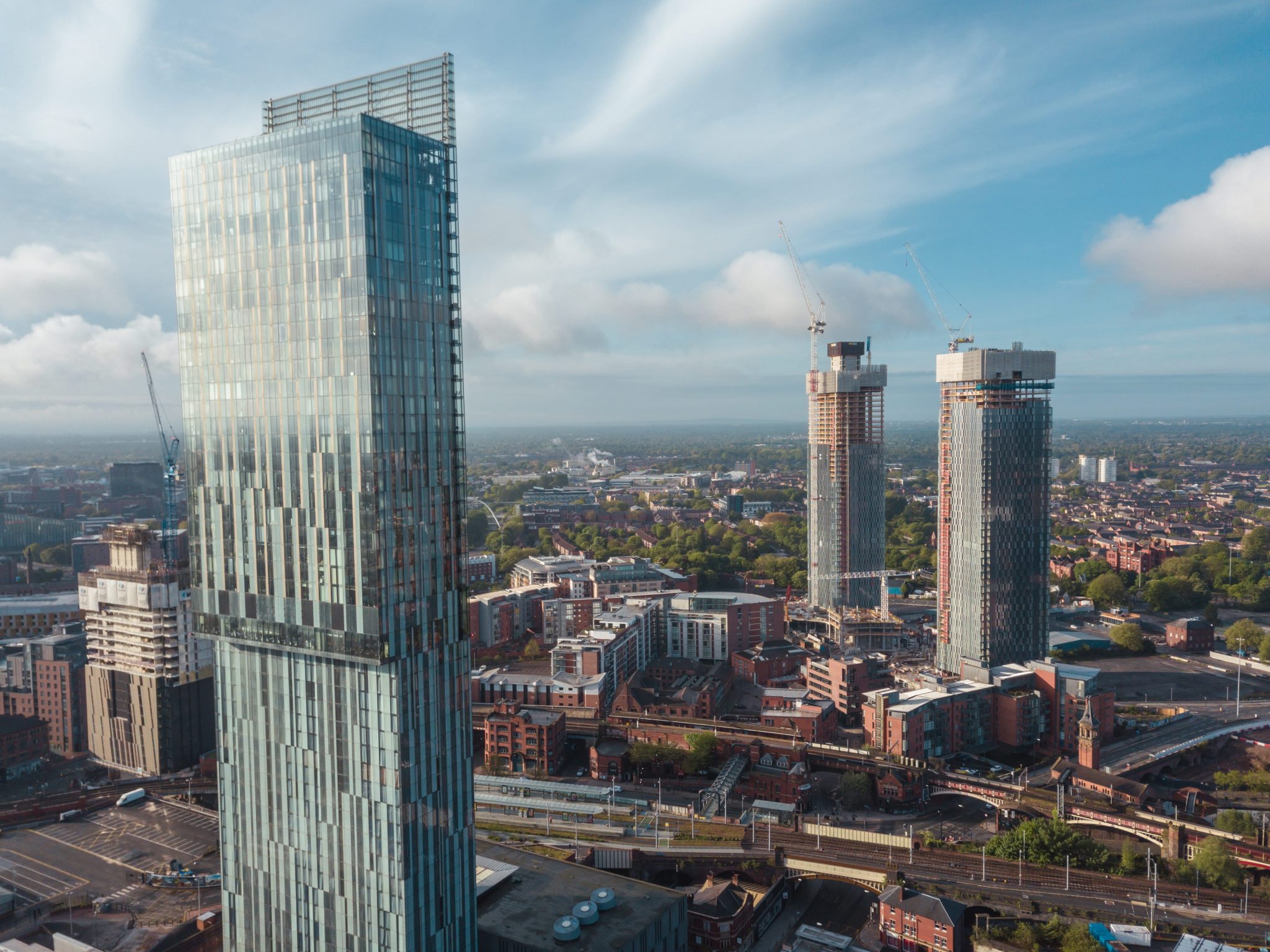
Within the region, Manchester (£1.42bn), Salford (£1.26bn) and Liverpool (£1.25bn) all rank within the top twenty most valuable local authority markets for foreign-owned housing stock.
While still smaller than London’s prime boroughs, their inclusion highlights sustained international interest in large regional cities with strong rental markets, ongoing regeneration and comparatively lower entry prices. Birmingham (£923m) also features among the higher-ranked markets, reinforcing the picture of overseas capital spreading into major Midlands and northern urban centres.
A market expanding rather than contracting
Taken together, the figures suggest that fears of an overseas investor exodus have not materialised. Instead, the data points to a market that is evolving — with London remaining the core destination, but regional hubs increasingly attracting a share of international money.